Christian polygamy: The “fake” debate

I was a little perplexed. It’s 2023, and Ghanaian Christendom seemed to be in a state of confusion about a subject that I considered a settled matter from my days as a child growing up in a Pentecostal church. It became the talk of town when the mistress of a banker (who was a leader in his church) sued him for breaching his promises to rent a house for her, pay for her upkeep and car and divorce his wife. Somehow this triggered a conversation about polygamy, especially amongst men on WhatsApp and other social media. The conclusion – even amongst many Christians on social media – seemed to be that monogamy was European culture imposed on Ghanaians, and that there really wasn’t anything wrong with it.

Then this week, a new video purporting to come from a sermon (or sermons) by popular Ghanaian preacher Dag Heward-Mills also seemed to suggest that polygamy was kosher for Christians, seeing us all the “heroes” of the Christian faith seemed to have had multiple wives and the bible didn’t explicitly condemn it. As usual, his disciples jumped to his defense, some claiming the video was doctored, and others claiming that he’d said nothing wrong.

But for me it reminded me of a trend that has been going on in Ghanaian Christendom for a while now – a trend led by both critics of Christianity, and charlatan pastors. On one end of the spectrum, the former – composed mainly of atheists and agnostics who doubt Christianity anyway and feel stifled by the attempts of Ghanaian Christians to force their beliefs on them. Their reaction to that unfortunate oppressive behaviour Christian cultural warriors is to simply say whatever subject is under discussion is simply colonial mentality or “European culture” imposed on us Africans. On the other end, the latter – represented by the likes of Christian Kwebena Andrews (popularly known as Kyir Abosom in Ghana) – teach this simply because they have lost any link to Christian orthodoxy and are only using the Bible to build their personal empires in a nation of the desperately poor.

And then there are the many befuddled ones in the middle. It was for these that I was most concerned, because their confusion was a symptom of a serious problem that continues to plague Ghanaian Christianity even while it claims to be growing in “numbers”. And the problem is that majority of our churches were simply not teaching Christianity – they are just teaching “Ghanaianity”. But before I go on to explain what I mean by that term, let me state this clearly for the record – Christianity has always advocated monogamy. Monogamy is not a “European” cultural imposition on Ghanaians. It is central to the Christian teaching about human flourishing and sexuality. While social media will like you to think this is a “debate”, there’s really no debate at all. It’s all a storm in a teacup. The church of Jesus is 2000 years old, and neither your favourite General Overseer or garden variety intellectual can make this into a “debate”.

And here is why, in simple terms.

What Did Jesus Teach?

As with everything Christian, we must start not from Moses, or David, but Jesus. When he was asked about divorce in Matt 19:1-12, Jesus responded that divorce wasn’t God’s plan for creation. Drawing from Adam and Eve in the Genesis creation narrative, he pointed out that the man and woman became “one flesh”, and are therefore inseparable. He explained that Moses gave them the right to divorce because of the “hardness of their hearts” (v8). This surprised his audience, as they thought his teaching was “too hard”. Jesus doubles down by saying that his teaching was indeed hard, and only those who are predisposed to hear it will hear it. He points out that some will have to be “eunuchs” for the sake of the kingdom. In Jesus’ mind, his kingdom was more important than marriage.

He takes it from another angle when asked a question by the Pharisees in Luke 20:27-39. When asked about marriage and how it affects the eternal state of man, he dictates that marriage was a convenience only “for this age”, and not for the age of resurrection. In so doing, he points again to his future kingdom, when the “burden” of marriage will no longer exist. And let’s not be fooled – the kingdom now and future was the crux of Jesus’ life and message – and this kingdom would only be entered by obedience to him, the king of that kingdom.

What Did Paul Teach?

It is this notion that marriage is a useful but limited “burden” which we bear on this earth which is why Paul the apostle encouraged others to be single like him. What many don’t realize about Paul is that he simply tended to expand and expound on what Jesus taught, and he did a good job of that being a trained Pharisee. But he wasn’t crafting a new religion – he was simply being faithful to his king – Jesus the Messiah. 

Some speculate that he might have been married before and divorced, hence his flippant attitude towards marriage. Others, represented by the likes of Dag Hewards-Mills seem to be saying in not so fine words that Paul “must have been talking out of his arse” (excuse my French). But such sloppy thinking and teaching is simply because as is the usual practice in Ghanaian Christendom and beyond, we don’t pay attention to what Jesus himself taught. Paul became “a eunuch for the sake of the kingdom” (Mt 19:11-12), and enjoined the young men and women of Corinth in 1 Cor 7 to “be as I am” (v7).

In expounding his position further, he makes a striking point which is exactly in line with what Jesus said about marriage himself.

I would like you to be free from concern. An unmarried man is concerned about the Lord’s affairs—how he can please the Lord. 33 But a married man is concerned about the affairs of this world—how he can please his wife— 34 and his interests are divided. An unmarried woman or virgin is concerned about the Lord’s affairs: Her aim is to be devoted to the Lord in both body and spirit. But a married woman is concerned about the affairs of this world—how she can please her husband. 35 I am saying this for your own good, not to restrict you, but that you may live in a right way in undivided devotion to the Lord.” (1 Cor 7:32-35)

Paul points out that earthly marriage is a “burden” that can lead to divided devotion to King Jesus. Hence his encouragement to everyone in the church – not just to any special class – that they either choose to be single, or stay faithful to their partner. By implication, the more the partners, the more the distraction and divided loyalty.

It is this, and much more guidance from other passages in the New Testament that led the church to mandate monogamy, starting from leaders and going further to everyone else. And trust me, the world in which Paul wrote this letter was a world in which all forms of polyamory thrived and were culturally accepted. But the early church stuck to its guns on this matter, and many in the Roman Catholic and Eastern Orthodox churches even mandate celibacy for their priests.

The matter of marriage then is not a matter of “what you like” or “what you can afford”, but a matter of devotion to your King and his kingdom. It wasn’t a matter of Greco-Roman or Jewish culture, it was a matter of obedience to Jesus.

Does that mean that the church didn’t meet situations where it had to navigate around polygamous relationships? Did everybody in the early church all of a sudden divorce their 2nd or 3rd wives because of Paul’s teaching? No, history tells us this was not the case. But monogamy was the standard, and everybody was urged in that direction. If a follower of Jesus was already in a polygamous marriage before they became a disciple, they knew very well that they were in an uncomfortable state, even if exceptions were made for them. But there was never a question of whether polygamy was accepted in early Christianity or not. That was a non-starter.

European/Colonial culture?

Because of the expansion of the church into Europe, the church took this mandate everywhere it spread, and soon (by fair means or foul), Europe was fully Christianized. It is this Christianization that made monogamy become a legal requirement. In some cases even cousin marriage was discouraged by the church.

We are well aware that unfortunately Christian religion came to Ghana dressed in European cultural garb, hence its sometimes difficult to distinguish between the two. It is therefore incumbent on Ghanaian Christendom and its leaders to help its members discern between what is European culture, and what is directly from the mouth of Jesus and his early apostles and implemented by the New Testament and early church. It is incumbent on our “clergy” to show us that they really are “contending for the faith that was handed to us” (Jude 1:3) by doing the diligent work that is expected of them.

At least our colonial masters respected our African cultures by making room for “marriage by ordinance” – which is really just legislating Christian monogamy, and “customary marriage”, which allows for multiple wives to a man. As is usual with patriarchy (and for the defenders of “African culture”), proponents of polygamy have not had the courage to ask themselves what the laws should be for a woman wanting to marry many men. But I digress.

Why is this important?

Because Ghanaian Christianity has been under attack on 2 fronts for a long time, and our churches need to wake up from their slumber and take their commission seriously, assuming they still actually care.

The more recent threat is secularism/scientism (not science – there’s a difference between the two). It takes the garb of intellectual discourse mixed with a desire to recover an “African” identity. It takes delight in raising the scepter of colonialism as an excuse to discount the Christian faith, while proposing itself to be more rational and enlightened than the mere mortals that parade this land. It is a growing phenomenon amongst the youth, and while not anywhere near tipping point, is only bound to grow.

But the second front is the one that so many Ghanaian churches are seriously losing the battle to. It’s not intellectual. It’s not evidence-based. It’s not rocket-science. It’s not above any Ghanaian’s pay grade. It’s simply traditional and contemporary African religion and culture, dressed in Old Testament garb to look biblical.

Unlike orthodox Christianity, African religions have always been transactional – give to the gods, and get what you need. Or give to the fetish priest, and get what you need from his god. And because our churches are now so desperately competing against each other for numbers and influence, many have fully opened the gate to the worst impulses of transactional behaviour – abuse of power, sexual abuse, misogyny,intolerance to questioning, barefaced stealing and bribery in church, and wickedness towards one another. We have insulated ourselves from criticism on this front because as “transactionalists”, we are performing our end of the bargain to get “God’s blessings”, be it money, jobs, children, marriage or any other material variety. If there is one thing that colonial Christianity didn’t give us, it was the god of Prosperity. That is a uniquely American god, and his twin brother was always very alive in transactional African religion.

It is the above form of Christianity which I call “Ghanaianity”. It pretends to be Christianity, but there’s no Christ in it. And it doesn’t matter that it’s propounded by the founder of a church with branches in 17 countries or with only 17 church members, when a teaching is flawed, it is flawed. This form of Christianity simply assumes “Christian” things, and invests very little effort in actually teaching the “why” of it, or learning the history and theology behind these. It simply uses it as an offshoot for its own culturally acceptable teaching.

Frankly I can understand when skeptics raise questions about monogamy against Christians. That’s par for the course. What I struggle with is when Christians, including church elders and pastors, are confused about the status of monogamy in our faith and practice. I’ve experienced a lot of hostility when I even point out to many Ghanaian Christians that in contrast to Jesus, they have an almost idolatrous attachment to marriage. This un-Jesus-like worship of marriage means that we are “righteously” mistreating single people, divorcees, widows and the like, and are patting ourselves on the back for it. Given this “idolatory of the married”, you can imagine how those of queer sexuality are treated, when the 2000 year history of the church has had well documented ways of embracing such people.

Conclusion

So to those in the confused middle, a simple reminder. The Christian faith is not about what you desire, but what King Jesus desires of his subjects. And he desires devotion, a requirement which is drastically reduced if one has more than one spouse. Remember, you are not going to be judged by how many wives or children you had, but how devoted to his kingdom you were – signified not by the number of church events you attended or how much you gave to your church’s latest fancy project, but by how you gave your time and money to relieve the distress of the many whom you are surrounded with, especially to those “of the house of God” – the mere mortals sitting next to you in that pew. (Mt 25:31-46; Gal 6:7-10)

Choose you this day who will have your devotion – Jesus, or your 2nd wife.
Discipleship and the Imago Dei

following-jesus

A few years ago I gave a presentation to young undergraduate Christian students on the importance of discipleship, which was then followed by multiple small groups to discuss the subject further. During this group session, somebody asked if a “disciple” is a higher level of Christian than a “believer”. I felt a bit devastated with the question, given all that we had said before, but I managed to clarify that to be a Christian was to be a disciple. But such levels of ignorance about discipleship amongst young educated minds who will in the future become leaders in Ghanaian churches and Christian communities made me realise that there really was a huge gap of understanding between what the New Testament expected of us, and what our churches were training us to be. Reflecting on J. Richard Middleton’s “The Liberating Image – Imago Dei in Genesis 1” brought home the centrality of discipleship to the whole enterprise of Christianity, evangelism and church. As i promised in my last post, its time to learn a thing or two from him.

Imago Dei in the Ancient Near East

One of the important reminders about reading the Old Testament is that there is the general scholarly consensus that it was edited and compiled during the exile. It thus exhibits certain tendencies to be critical of the ideologies that it was confronted with before and during the exile. And the 2 most dominant ideologies that it critiques are those of Mesopotamian ideologies (ie Assyria and Babylon, who ended up enslaving Northern Israel and Southern Israel respectively) as well as Egyptian ideologies which they inherited after the Exodus. Viewed in this light, Middleton points out how the idea of humans being created in the image of God would have developed to counter specifically the Mesopotamian ideas about humanity, seeing as Israel was exiled there for 70 years.

Middleton points out that in the Ancient Near East amongst whom Israel existed, almost all the dominant cultures viewed human beings as slaves of the gods, created to do the menial work that the gods didn’t want to do. However, there was a small but very important distinction amongst human beings. The Egyptians believed that their Pharaohs were gods (or incarnations of the gods), whiles Mesopotamians believed that their kings were humans, but were made in the image of their gods. Alongside these Mesopotamian kings, the priests, who served in the presence of the gods were also made in their image. This implied that every one else was just a slave of the gods via the gods’ appointed representative “images” ie the king and his priests. Given this status of a Mesopotamian king, to disregard the commandments of a king like Nebuchadnezer was to question not just the king, but Marduk himself, the primary deity of the Babylonians whom the king represented. You can understand why Shadrack, Meshack, Abednego and Daniel wouldn’t have been holding hands and singing kumbaya in Babylon, as recorded in the book of Daniel. Of course there were times Mesopotamian kings not only held their “image” status dear, but blurred the lines between being the image and being the god themselves, but that is of course the way of humans when power gets into their head.

Imago Dei in the Old Testament

However, the people of Israel tell a different story about human existence. Their story went like this.

  1. Yahweh, the Creator god, created all human beings in his image. All humans are of equal worth to Yahweh, meant to “rule over the earth”, not be slaves for the benefit of others made in his image.

  2. Being “made in Yahweh’s image”, each and every human being’s responsibility was to look a little bit like that of a previous group of people I have mentioned above who were made in the image of the gods in Mesopotamia – kings and priests. It is therefore not for fun that both Yahweh’s address to Israel after the exodus, and John of Patmos’ vision in the book of Revelation are aligned when they speak of Israel and the church respectively.

    Now if you obey me fully and keep my covenant, then out of all nations you will be my treasured possession. Although the whole earth is mine, you will be for me a kingdom of priests and a holy nation.’” (Ex 19:5-6 NIV)

    And they sang a new song, saying: “You are worthy to take the scroll and to open its seals, because you were slain, and with your blood you purchased for God persons from every tribe and language and people and nation. You have made them to be a kingdom and priests to serve our God, and they will reign on the earth.”(Rev 5:9-10 NIV)

  3. The primary problem then would seem to be that humans have lost the sense of direction as to what god in whose image they were made. They therefore worship their own creation or themselves, and fail to live as Yahweh had designed them to live. Just as Eve got deceived by the serpent into thinking that the fruit of knowledge of good and evil was desirable for gaining wisdom” (Gen 3:6 NIV), humans craft their own “wisdom”, leaving behind the real source of wisdom – Yahweh himself. Hence the wisdom statement “the fear of Yahweh is the beginning of Wisdom” (Prov 9:10;Ps 111:10 NIV)

  4. And even when humans discern this god in whose image they were made (as Israel claimed to have discerned after the Exodus), they misunderstand understand his character and so do not reflect it properly. Speaking of Israel during the Exodus, Yahweh says:

    For forty years I loathed that generation, And said they are a people who err in their heart. And they do not know my ways” (Ps 95:10 NIV)

In short then, the key problem of human beings is not that they have failed some morality test that God set for Adam and Eve, but that they have rejected covenant relationship with the loving Creator god, Yahweh which will enable them to reflect his ways as image bearers upon this earth. This has lead to frustrations, inequality, poverty, violence and death. As NT Wright puts it in his book “The Day the Revolution Began”, the key problem of humanity is idolatory, leading to not being a true image bearer after the one in whose image we are made.

Once this conclusion hit me, being an avid reader of the Psalms and the prophets, I began to notice how stridently they criticize the “nations” aka Gentiles for not listening to Yahweh, and why Paul the apostle launches his epistle to the Romans with the standard Jewish criticism of this problem – the problem of idolatory leading to immorality.

Enter Jesus

Jesus enters the scene, and makes certain claims about his identity. The people of Israel think they know who Yahweh is, and what his character is like. But Jesus makes a scandalous claim – he is the embodiment of Yawheh, Israel’s God, and everything they previously knew about Yahweh, they knew in part. He had come to reveal Yahweh’s fullness. The Gospel of John puts the above scandalous statement pointedly.

No one has ever seen God, but the one and only Son, who is himself God and is in closest relationship with the Father, has made him known.” (Jn 1:18 NIV)

John even puts these words in Jesus’s own mouth

Stop grumbling amongst yourselves”, Jesus answered … “No one has seen the Father except the one who is from God; only he has seen the Father.” (Jn 6:43-46 NIV)

The author of Hebrews nails it down further

The Son is the radiance of God’s glory and the exact representation of his being” (Heb 1:3 NIV)

It is important that Christians not miss the implication of the incarnation of God in Jesus. Since Yahweh desired that the human beings he has so loving created in his image will actually learn to “be his image” (not the image of Marduk, Enlil, Zeus, money, sex, power and a million other gods that can be named) and to properly represent his character and “ways” on this earth, he came in the flesh and showed us who he was like. And when he had finished showing us who Yahweh was like in the person of Jesus – that Yahweh was a loving God who was willing to sacrifice himself even to death for the ones whom he loved, including for his enemies – he made a simple statement that large swathes of Christianity have been avoiding for centuries on end.

Then he called the crowd to him along with his disciples and said: “Whoever wants to be my disciple must deny themselves and take up their cross and follow me. For whoever wants to save their life will lose it, but whoever loses their life for me and for the gospel will save it.” (Mark 8:34-35)

The implications are clear, if one is paying attention and not reading the Gospels as nice stories for Sunday school children.

  1. God has shown us his character and his ways in Jesus. To “worship” Yahweh then, is to “follow Jesus”.

  2. We who are created in his image are meant to follow in manifesting that character and way. There is a reason why the disciples were called “followers of The Way” (Ac 22:4).

  3. That way leads through the path of self-sacrifice and loss, and into eternal life both on this earth, and in the life to come.

  4. God himself takes upon himself defeats the powers of death and sin that enslave us from living as people made in his image by taking upon himself the punishment for our sins in the person of Jesus on the cross. We can now truly live as those made in his image.

The apostle Paul caps it off with a seminal statement about God’s goal for calling people into his church, using imago dei language of Genesis 1.

For those God foreknew he also predestined to be conformed to the image of his Son” (Rom 8:29 NIV)

The Priority of Discipleship

The Christian life then, is centered around discipleship – following in the way of the one in whose image we were made. The Christian life is not about “saving souls” and giving them a ticket to heaven so they don’t go to hell. The Christian life is not about elevating “spiritual issues” over daily life ones. The Christian life is not about living in a constant state of “sin management”, as Dallas Willard puts it. All these are side issues that have clouded the real issue. The Christian life IS about being human on this beautiful earth that Yahweh, the Creator god intended for us to live, in anticipation of the new heaven and the new earth that he himself will bring to pass. In Jesus we see what it means to be human, because we see the character of him in whose image we were made. The church Father put it this way.

Christianity is an entirely new way of being human.”- Maximus the confessor,

And that is why Jesus reminded us of the 2 most important things in the world, what Scot McKnight calls “The Jesus Creed”. a) Worship the right God (Yahweh, as revealed by Jesus) and b) follow in that God’s ways (ie love your fellow human being as Yahweh does, for they are also created in Yahweh’s image, as you are).

The most important one,” answered Jesus, “is this: ‘Hear, O Israel: The Lord our God, the Lord is one. Love the Lord your God with all your heart and with all your soul and with all your mind and with all your strength.’ The second is this: ‘Love your neighbor as yourself.’ There is no commandment greater than these.” (Mk 12:29)

Whenever we think discipleship is a side issue, whether in evangelism, apologetics, theology or running a church, we are indeed missing the heart of the matter.

Vicit Agnus Noster, Eum Sequamur – The Lamb has conquered, let us follow Him


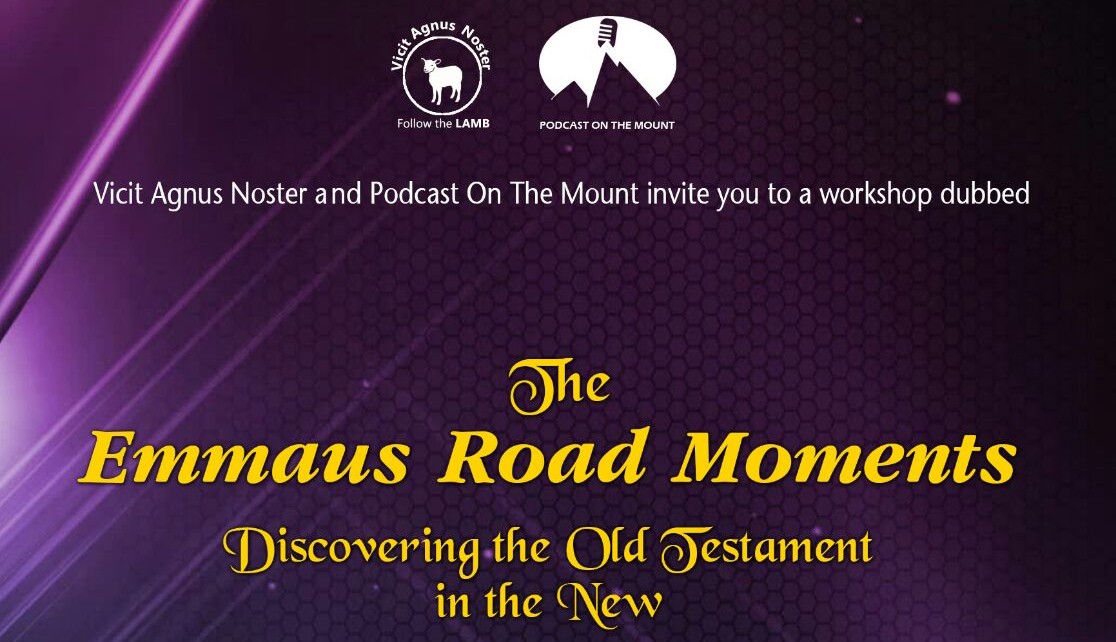
Announcing “The Emmaus Road Moments”

Emmaus Road Moments
Emmaus Road Moments

So it’s happening on the 7th March 2016. What’s happening, you say?

Those of you who have been listening to our podcast (Podcast On the Mount) will have noticed that Jonathan and I keep talking about certain themes – the exodus, the exile, the Messiah, the kingdom of God, salvation, the promises of God, Yahweh’s return, the age to come, the prophets, vindication etc. Well, we’re putting together an event dubbed “The Emmaus Road Moments” (obviously stolen from Lk 24:13-35) to do a little bit of “beginning with Moses and the Prophets” as we shed light on why these things are important to reading and grasping the New Testament. It also gives you the chance to ask all the questions that you wanted to ask about our episodes of the podcast so far.

Over the past few years of reading and digesting scholars like Scott McKnight, Michael F. Bird, Ben Witherington, NT Wright and Richard B. Hayes, its become more and more apparent to us how important a good grasp of the Old Testament is to understanding the New Testament. Struggling with Old Testament scholars like Walter Bruggeman, Christopher J.H. Wright and John H. Walton only sunk home the feeling further. This has led us to 3 major conclusions so far.

  1. No matter how much one desires to be faithful to scripture, one’s reading of the bible will be limited if one is not aware of the history and context of the books of the bible. We hope to shed some light on reading the NT with the history of the people of Israel in mind.
  2. There is a huge gap between the insights that biblical scholarship has revealed about reading the bible faithfully, and what is actually taught in our churches. In essence, many of our preachers in Ghana are simply teaching received theology, some of which has been debunked years ago as no longer valid interpretations of scripture but which continue to be the norm in churches. Very few of our preachers are actually committed to serious study of the bible, and fewer still are actually trained to do so. We hope to give some of the lessons we’ve learnt about the “how” of studying the bible.
  3. Jesus is the hermeneutic key to moving from simply knowing the bible to being empowered to take that knowledge and live out the kingdom. Getting that right means a world of difference to how we approach scripture. We hope to show how Jesus casts his light on the Old Testament hopes, dreams and expectations, and how disciples like Paul who are familiar with the history of the people of Israel now reframe everything they did around the coming of Jesus.

So if you will be in Accra on the said date, then you should make it a point to join us at the Good News Theologial Semianary at Oyibi, on the right side of the main Dodowa road after the Valley View University campus. We hope everyone is seated at 10 am, and we’ll serve refreshments as well. Here’s a link to google maps directions from Madina Atomic Junction to the Seminary

We intend to share the slides as well as teaching material that we used when we went through this topic ourselves with our attendees, so please register for free here so we know who is coming and also so we can send them to you after the event.

We would like to express our sincere gratitude to Dr Thomas Oduro, Principal of the Good News Theological College and Seminary for giving us the opportunity to use his facilities for this event. May his tribe increase.

See you guys soon. Bring along 2 things – a friend and your questions. I promise to answer all your questions to your satisfaction (just kidding. I’ll tell you plainly if I have no clue to your question)

Podcast On The Mount Launched!!

Podcast On The Mount

So if you haven’t heard already, this is to announce the first episode of a podcast I launched with my friend Jonathan Amos called the Podcast On The Mount. Don’t you love the name? Jonathan came up with it, so if you need to blame someone, you know who to direct your questions to 🙂 . The podcast is hosted here

Appropriately, this first episode talks about the Sermon On The Mount, where we look at what is unique about this section of the Gospel according to Matthew, and how Christians should appropriate this important part of Jesus’ ministry.

Like us on Facebook and follow us on Twitter to keep up to date with exciting episodes, as we delve deeply into Jesus, discipleship and community from a totally different perspective. Do not hesitate to send your comments and questions via these social media outlets. We’re looking forward to hearing from you.

How Beautiful Are Your Feet?

Photo Credit: Nina Matthews Photography via Compfight cc

There are days when you are staring a totally earth moving concept in the face, but don’t realize it. Sometimes its because this concept doesn’t come in one nicely labeled package, but as an assimilation of multiple thoughts and events put together over any length of time. Maybe it’s Scott McKnight’s commentary on the “Sermon on the Mount”. Maybe its listening to Handel’s Messiah and pondering the root of his compositions in the prophets and Psalms. Maybe its hearing from my brother Michael at our church meeting on how many Christians have a limited view of what repentance means. But all of these only added many more dimensions to something I was already convinced about.

“Christians truly get the picture wrong when we say that The Good News is that Jesus came to die for our sins so we can escape the judgment of hell and go to heaven when we die”.

Just listen to a lot of evangelistic sermons aimed at “winning souls” and you will realise that it’s LARGELY about telling people to believe in Jesus so their sins will be forgiven and they go to heaven instead of hell. But not only was this not what the gospel of Jesus was about, going to heaven was not primarily what Jews were hoping for. In fact there is very little mention of what happens after a righteous Jew dies in the Old Testament and the little that is mentioned is seriously unlike our modern day picture of heaven. So the question is what would have been good news to the Jew of Jesus’s day, and by extension for us today?

The Sermon On The Mount Angle

I’ve been reading New Testament scholar Scott McKnight’s (SMcK) commentary on the Sermon on the Mount, and I’d finished digesting his thoughts on “blessed are the poor in spirit”(Mt 5:3). From his exposition of the Jewish background of people who were considered “poor in spirit” (anawim) in Jesus’ day, he gave 2 classical examples of such candidates right from the gospels – Simeon and Anna both in Lk 2. He cites the fact that there were certain characteristics of the anawim – mostly that they were indeed poor (as in real poverty), and were looking forward to the coming of the Messiah to right the injustices of their age. To this end they were very devout observers of the Torah (which is evident in constant attendance at the temple by the above 2 people).

The Handel Angle (Pun Intended)

So I’d grown tired of listening to music from Incognito, an acid-jazz band, and had switched to listening to George Frideric Handel’s Messiah. I’m always amazed at Mr Handel’s adeptness with the Psalms and the Prophets in this great baroque composition, and this time I found myself pondering a bit more over “How Beautiful Are the Feet”. But it didn’t quite hit me the linkage to what I was reading on the Sermon on the Mount yet until Sunday morning, whiles getting ready to go for our church meeting. I stopped and read Isaiah 52:7-10 again, and things began to fall into place better.

How beautiful on the mountains are the feet of those who bring good news, who proclaim peace, who bring good tidings, who proclaim salvation, who say to Zion, ‘Your God reigns!’. Listen! Your watchmen lift up their voices; together they shout for joy. When the Lord returns to Zion, they will see it with their own eyes.”(Is 52:7-8)

The Watchmen

So where’s the link, you ask? Well it seems to me that people like Simeon and Anna were a clear example of the watchmen spoken of in Isaiah 52 above. If you pay better attention not only to Simeon and Anna’s behaviour but what they said, you will get the joke.

Simeon, a classical anawim, was “waiting for the consolation of Israel” (Lk 2:25). What would a Jew like Simeon have considered the consolation of Israel? The good news for Israel? To see Yahweh’s return to his people, and the revelation and of his Messiah, as Isaiah above clearly points out. Thankfully, Simeon had been assured by the holy spirit that his life’s desire will indeed be granted i.e. “he will not die before he had seen the Lord’s Messiah” (v 26). Having seen the baby Jesus, his life’s goal is achieved. He prays to Yahweh thus:

Sovereign Lord, as you have promised, you may now dismiss your servant in peace. For my eyes have seen your salvation …” (v 29-30)

Observe the parallel with Isaiah

When the Lord returns to Zion, they [the watchmen] will see it with their own eyes” (Is 52:9)

Again, the other watchman Anna also having seen the child begins to do what is expected of a watchman – telling all the people who were looking forward to going to heaven when they die the redemption of Jerusalem that their hope had indeed arrived.

Good News Indeed

From Isaiah above, the good news itself is the fact that Yahweh has returned to his people. And as a result of that he is bringing peace, he is bringing salvation, he is bringing good tidings. Having been decimated by Assyrians and then Babylonians into exile, and after returning from exile still being under the thumb of first Syria (Greece) and then Rome, the people of Israel knew that Yahweh had abandoned them. After all if Yahweh was still with them, he would not allow his temple of all places where he dwelt, to be destroyed by these enemies of God. See why Ezekiel devotes 8 chapters to talking about Yahweh rebuilding and returning to the temple?

Yet the hope that the prophets had always held out to them was that Yahweh will return, and appoint a new, more faithful king – the Messiah, sometimes referred to as the Servant, the son of God in the prophets. And this time Yahweh’s promise to Abraham, that all nations (including Gentiles like you and I) will be blessed through the nation Israel and its faithful Messiah (Ps 72) will indeed come to pass.

The gospel or good news then (and now) is that Yahweh had returned, and he had declared Jesus to be his Messiah. The surprising twist was that this Messiah was indeed Yahweh himself. This is why Mark begins his record of Jesus’s life with the statement “The beginning of the good news about Jesus the Messiah, the Son of God” (Mk 1:1)

I’ve read it, and have recommended it. But I now get why NT Wright chose the title “How God became King” for his book. The Gospel is the declaration that Jesus is God’s Messiah and King of the world, and that surprisingly that Messiah was God himself.

To the evangelist, how beautiful are your feet? Are are you still busy telling people to come to Jesus so they go to heaven? Are you frightening them with hell? Are you sure you are preaching The Gospel, or you are preaching an effect of The Gospel? Because frankly the two are not the same, and most definitely do not produce the same result.

The Sons of God

The other day, I was a bit perplexed when I came across the Luke 3:38. Verses 23 to 38 describe the whole genealogy of Christ, but I had to stop and think when I read v. 38

… the son of Enosh, the son of Seth, the son of Adam, the son of God”.(Lk 3:38 )

Wait. I thought only Jesus Christ was ever referred to as the “Son of God”? Or does the fact that we capitalise the spelling of his make him a different kind of son than Adam? Further study helped clear things up a bit, and I’ll only make a tip-of-the-iceberg attempt here.

The Bible states in John 1:12 that we who believe and receive Jesus Christ are given the right to become children of God (KJV “sons of God”). The question is why we need to be given the right to become sons of God. Why does God make us his sons? The truth of that is stated in Ro 8:29:

For those God foreknew he also predestined to be conformed to the likeness of his Son, that he might be the firstborn among many brothers.”(Ro 8:29 )

Now if we are children, then we are heirs – heirs of God and co-heirs with Christ, if indeed we share in his suffering in order that we may also share in his glory.” (Ro 8:17 )

So here we have a simple statement of the mind of God in redeeming us. The purpose of our discipleship, the grand design of it, is to get sons & daughters of God who will share the reign of Christ with him. This is also in keeping with John’s vision of the millennial kingdom in Rev 20:4,6.

I saw thrones on which were seated those who had been given authority to judge. And I saw the souls of those who had been beheaded because of their testimony for Jesus and because of the word of God … Blessed and holy are those who have a part in the first resurrection. The second death has no power over them, but they will be priests of God and of Christ and will reign with him for a thousand years”.(Rev 20:4;6 )

Note the description here.

  1. These people are seated on thrones. (compare with Lk 22:28-30)

  2. They have been given authority to judge (compare with 1 Cor 6:2-3).

  3. They are called “priests of God” and they reign with Christ as kings. We’ll delve more on this royal priesthood later.

As I pointed out to a someone the other day, Jesus Christ came to give this opportunity to everyone worldwide, but He knows that it is only the few who will qualify to be take this opportunity in spite of numerous attempts by the masses. Remember the broad way/narrow way story? It was not for naught that James said they were given apostleship by Christ NOT to call ALL Gentiles but to “call out from among the Gentiles a people for his name” (Ac 15:13). So then, how does on qualify to be amongst the “called out”? How does one become a son? Let’s look at certain other passages that talk more about sonship.

  1. You are all sons of God through faith in Christ Jesus” (Gal 3:26 ) – similar to Jn 1:12, the first qualification to be a son is faith in Christ and his finished work on the cross. As Peter conceded , “Salvation is found in no-one else, for there is no other name under heaven given to men by which we must be saved” (Ac 4:12). I believe many of us are familiar with this first step and I will not belabour the point.

  2. Because those who are led by the Spirit are the sons of God”(Ro 8:14 ) – this refers to a continuous submission to the leading and direction of the Holy Spirit.

Many of today’s Christians are still living the baby life. After being saved by faith and grace, we refuse to be matured by submission to the Spirit’s guidance, and continue to live in our unregenerate nature. We want to claim a faith in God but continue to serve him according to our own wisdom. But Gal 2:20 tells us what we’ve become, again by faith in Christ.

I have been crucified with Christ, and I no longer live, but Christ lives in me. The life I live in the body, I live by faith in the Son of God, who loved me and gave himself for me”. (Gal 2:20 )

If we refuse to accept the fact that when we decided that Jesus should be our Saviour, we were crucified with Christ and Christ lives in us, then everything we do will be under the direction of the flesh, and not of the Spirit. We will still be trying to please God according to our own wisdom, which James describes as “earthly, unscriptural, of the devil”(Jas 3:15). Paul puts it very simply: “those controlled by the sinful nature cannot please God” (Ro 8:8).

  1. Endure hardship as discipline; God is treating you as sons. For what son is not disciplined by his father?” (Heb 12:7)

I’ve come to the point which is the most difficult for the contemporary Christian to submit to – suffering. It’s importance is underlined by the fact that the Son of God, whom we are supposed to be like, had to go through his own share.

Although he was a son, he learned obedience from what he suffered, and once made perfect, he became the source of eternal salvation for all who obey him …” (Heb 5:8-9 )

The purpose of God allowing us to go through suffering is so our characters will be refined. If God is going to entrust the rule of this world to his sons, then he must make sure that such sons would be sons who are worthy of leadership, and the greatest mark of leadership is always defined in character.

Not only so, but we also rejoice in our sufferings, because we know that suffering produces perseverance, perseverance, character, and character, hope” (Rom 5:3-4)

Note that this is not a character that is constituted of self-belief, but – in sharp contrast to today’s “believe in yourself” theory – a character that reflects God’s own character. Such a character is not formed out of our own self will, but a simple and total submission to the authority of God, to His Word and to His Spirit. The characters of faith in Heb 11 exhibited such submission, and Abraham’s example is described below.

By faith Abraham, when called to go to a place he would later receive as his inheritance, obeyed and went, even though he did not know where he was going” (Heb 11:8).

Contrary to the contemporary Christian’s mentality, the early disciples were under no misconception about the imperative of suffering

.

Then they returned to Lystra, Iconium and Antioch, strengthening the disciples and encouraging them to remain true to the faith. ‘We must go through many hardships to enter the kingdom of God’”, they said. (Ac 14:21-22).

  1. But the endurance of suffering is not worth anything if that endurance is abandoned midway. Christ has promised that “To him who overcomes, I will give the right to sit with me on my throne, just as I overcame and sat down with my Father on his throne” (Rev 3:21). It is interesting to note that this was contained in the letter to the Laodicean church – obviously to believers. So even though we are sons by our faith in Christ, our final declaration as sons of God will only be made if we overcome. Then, we can sit with Christ and rule the nations, as Rev 20 shows us.

But how do these explain why Adam, who was thousands of years before Christ’s coming, could be called a son of God? Given that he never believed in Christ, was never filled with the Holy Spirit (at least not as far as I know) and was never deemed to be an overcomer, how could he be called a son of God? The answers will be found in these subsequent points. Note that my references to Adam also refer to the whole human race in general.

  1. God created Adam in his own image and likeness (Gen 1:26) and gave him authority over the earth. God gave man a taste of the authority that he was to inherit in his final state, if only he obeyed God.

  2. God intended that if Adam passed the test of not eating of the fruit of the knowledge of good and evil, he will give him to eat of the fruit of the tree of life. Christ intends to give that reward to those who overcome – “To him who overcomes, I will give the right to eat from the tree of life, which is in the paradise of God” (Rev 2:7). This was the same tree of life that God prevented Adam from eating after his fall in Gen 3:22.

  3. God intended that everything, including Adam renewed after eating the fruit of the tree of life, will be summed up in His Son Jesus Christ. Paul calls that the “mystery of His will” that God had made known to them: “And he made known to us the mystery of his will according to his good pleasure which he purposed in Christ, to be put into effect when the times will have reached their fulfilment – to bring all things in heaven and on earth together under one head, even Christ”(Eph 1:9-10).

  4. That this has been God’s eternal plan was also not in doubt to the early Christians. Paul reminds Timothy of it in his second letter to him – “God, who saved us and called us to a holy life – not because of anything we have done, but because of his own purpose and grace. This grace was given us in Christ Jesus before the beginning of time.” (2 Ti 1:8b-10)

All of these go to point out the fact that Jesus Christ only came to fulfil the purpose that God had intended for man right from creation, and God had already made provision for man’s (through Adam’s) failure. The purpose has always been the same, as well as the means to achieve it. The purpose was that men become sons of God, and the means was in Christ through a total belief and obedience to God. All is summed up in his Son, Jesus Christ. In fact, it is important to note that it is God who is the one pursuing man, not the other way round. When Jesus Christ said “For the Son of Man came to seek and to save what was lost” (Lk 19:10) he meant what was lost to God. God lost his potential sons, and those sons had to be bought back.

It is then of exceeding annoyance that God’s effort to save man is thwarted by man’s unbelief, and God has consciously made it a point throughout His word to state clearly His coming merciless judgement of such unbelief. As it turns out, Adam’s primary sin was a disbelief in God, and that has been the bane of man since, with the nation of Israel no exception. He had punished the unbelief of the Israelite nation before, wiping out all the six hundred thousand (counting men only) Israelites who left Egypt on the exodus, and allowing only Joshua and Caleb out of that generation to enter the land of promise. This is the theme that the writer of Hebrews uses to exhort us to hold on unwaveringly to our belief in the living God.

See to it, brothers, that none of you has a sinful, unbelieving heart that turns away from the living God. But encourage one another daily, as long as it is called Today, so that none of you may be hardened by sin’s deceitfulness. We have come to share in Christ if we hold firmly till the end the confidence we had at first. As has just been said: ‘Today, if you hear his voice, do not harden your hearts as you did in the rebellion.’” (Heb 3:12-15 )

Finally brethren, I’ll like to leave this discussion by reminding us again of a section of Hebrews.

In bringing many sons to glory, it was fitting that God, for whom and through whom everything exists, should make the author of their salvation perfect through suffering. Both the one who makes men holy and those who are made holy are of the same family. So Jesus is not ashamed to call them brothers.” (Heb 2:10-11 )

Is Jesus ashamed to call you a brother?

Peace, But At What Cost?

I have had course to muse on the attitude of Ghanaians towards next week’s elections and especially that of Christians in this country. I have determined not to make a comment about my observations, but I can’t hold my thoughts in any more, and I believe it is incumbent upon me to share it with all who are interested, especially Ghanaian Christians.

First of all, I’m also a Christian who subscribes to the authority of God over every human being on this earth. As 1 Co 11:3 teaches us, the head of the woman is her husband, that of the husband is Christ, and that of Christ is God. God delegates his authority to other men, who must exercise this authority in both kindness and sternness, as God himself is.

Ro 11:22 “Consider therefore the kindness and sternness of God; sternness to those who fell, but kindness to you, provided that you continue in his kindness. Otherwise you also will be cut off.”

God himself being the source of all authority, respects whatever a nation institutes as its structure of authority. This hierarchy of authority must always be respected, even if the authority is abused. It is important to note that authority abused does not render that authority cancelled. When Saul abused his authority in trying to kill David, the latter still respected him as the one anointed by God, and refused to kill him even when he had the chance.

As a result of this understanding, it has been a part of my church’s daily meeting routine to pray for the nation, whether in election year or not in accordance with 1 Ti 2:1-2.

1 Ti 2:1-2 “I urge, then, first of all, that requests, prayers, intercessions and thanksgiving be made for everyone – for kings and all those in authority, that we may live peaceful and quite lives in all godliness and holiness.”

In fact, we take the “first of all” so literally that it is the first prayer topic on our prayer list when we meet. And I believe that it should be so throughout all Christendom.

Ghanaians are concerned about the level of pre-election violence, and many wonder what it will be like during and after the elections, especially if either one of the major political parties does not win. The occurrences in Kenya, until recently a peaceful nation and other African countries have jolted people awake to the reality that it could happen in Ghana as well – a fact that I’ve never doubted. It is my cardinal belief that you can never hold down a people for ever – there is always a boiling point and there’s no telling what could happen when that point is reached.

In this regard, there has been a cry raised for prayer for this dear nation of ours, especially as we enter an election period. And this cry has been very pronounced among the Christian community, with some of us sharing our convictions of the same need through emails, forums etc. People have organised all sorts of well-intentioned programmes to pray for the nation, and the false prophets are also capitalizing on this to do their part – which is to be expected. But the question I keep asking myself is at what expense do we want “peace” in this nation? Do we want peace, so that the wicked may still continue to rule the land? Do we want peace, so that the poor may continue to suffer, and the defenseless may have no recourse to justice under the powers that be?

If there is one thing that Christ promised us, it is not the peace of this world.

Mt 10:34 “Do not suppose that I have come to bring peace to the earth. I did not come to bring peace, but a sword.”

However the devil has unleashed a very deceptive message to the Ghanaian populace today, called “peace at all costs”. His most effective tool for this deception is our pulpits, using priests and “men of God” who keep pumping us full of messages of peace, when they forget that true peace can only come when there is justice, equity and truth in the society. Instead of encouraging people to look out for the godly characters of our leaders and vote on those basis, they are dulling the minds of people in preparation to accept whatever outcome there is in this election. How different are they (and us) from the generation of the days of Jeremiah and Isaiah?

Jer 6:13-14 “From the least to the greatest, all are greedy for gain; prophets and priests alike, all practice deceit. They dress the wound of my people, as though it were not serious. ‘Peace, peace’, they say, when there is no peace.”

Is 30:10 “They say to the seers, ‘See no more visions!’ and to the prophets, ‘Give us no more visions of what is right!’. Tell us pleasant things, prophesy illusions.”

The greatest sin that any generation can commit is to live in denial of the truth of their age – to continue in the pursuit of self-preservation and self-enjoyment when there is clear evidence of abundance of injustice and inequity around them. For your information, the root of the abominations of Sodom and Gomorrah begin with these same causes. It is a classic symptom of a society that doesn’t care for each other that they finally fall into the pursuit all sorts of sensual pleasures, which in the case of Sodom and Gomorrah was sexual perversion.

Ez 16:49 “Now this was the sin of your sister Sodom: She and her daughters were arrogant, overfed and unconcerned; they did not help the poor and needy.”

Is 58:6 “Is not this the kind of fasting I have chosen; to lose the chains of injustice and untie the cords of the yoke, to set the oppressed free and break every yoke?”

And the truth of Ghana today is that there is so much poverty, desperation and injustice about us, yet there is a continuous effort to enrich the rich. In spite of all this, the contemporary Christian is the least bothered about it. We ourselves do not have the attitude of concern for the poor amongst us (in our congregations), our families and our neighbourhood. We have come to the conclusion that God has called “Me” to bless “Me”. Period. The purpose of God’s blessings are lost upon us. Paul reminds us of the reason why we need to be blessed in all things – so that we may abound in good works. Jesus also reminds us that we will always have poor people amongst us, and we must endeavour to see to their needs.

2 Co 9:8 “And God is able to make all grace abound to you, so that in all things at all times, having all that you need, you will abound in every good work.”

Mt 26:11 “The poor you will always have with you, but you will not always have me”

Jas 1:27 “Religion that God our Father accepts as pure and faultless is this: to look after orphans and widows in their distress and to keep oneself from being polluted by the world”

I therefore find it totally unacceptable to see “men of God” on TV claiming they are praying for peace in this nation, when they won’t even mention the act of election itself and what should guide people’s choices during the elections. Are they worried about the plight of Ghanaians at all or they are seeking the praise of men for being the “pillars” of peaceful elections in Ghana? What do they want the peace for? Do they want it so they can continue to collect their Sunday offering from the poor churchgoers and live in luxury, or they want peace so that the poor people of Ghana will live purposeful lives, lives filled with hope that God has not neglected them?

To me, there are two questions that we as Ghanaian Christians need to answer. The first is what should inform our choices in this election? Going into details on the criteria for determining a Ghanaian Christian’s vote will probably take a whole day, so this attempt is only a shortened one. Ghana is a nation of Christians, Moslems and traditional worshipers, with a spice of other religions to mix. Ghana is not a nation like Israel, which God had a covenant with to be it’s God and they be his nation – Ex 19:3-6 (no other nation has this covenant anyway). As a result of this, to a Christian, character is of the overriding importance. In setting the standards for choosing leaders for the Ephesian church, Paul advises Timothy to first look out not for the “spiritual” competence, but competence in character – competence in morality (1 Ti 3) . And to this extent even though some may not agree, if one of the leading candidates for this election were a Moslem, but he showed character as opposed to a Christian candidate whose virtue is not evident, I’ll respectfully urge that we vote for him. Simply put “Faith without works is dead”. If Ghanaian Christians had been more circumspect in applying Christian and biblical principle in selecting some of our leaders, we wont be where we are now. Indeed, we must look out from the choices we have at the one who has been consistent at showing virtues of uprightness, kindness, industriousness, humility, pursuit of equity (not equality – that is utopian) and justice. As worldly people we would probably vote based on competence and track record, but as disciples of Christ the basis of our judgement should be as God will judge – moral integrity first before anything else – “Man looks at the outward appearance, but God looks at the heart” 1 Sa 16:7.

The second and even more telling question is what should be our reaction on the election results itself? If there is evidence of rigging in the favour of one candidate or the other, do we sit down and say “Ye pe asomdwe” in the face of deception and lies? Or do I suggest that Ghana go into civil war? Far from it, because “God is not an author of confusion” and neither should anyone who claims to be his child or servant. As I’ve already established, praying for peace in this nation has been part our fabric as a church, and I strongly believe that peace in a nation leads to better livelihoods and an ability to continue doing the will of God on this earth. However, if I know my God well, he is also a God of severity and that the pursuit of truth to him is more important that that of peace. Ronald Reagan once said that  “peace is not the absence of conflict, but the ability to handle conflict by peaceful means”. If justice and truth are not served, peace is only an illusion. It will always come back to haunt us, so the earlier we deal with it the better. If you don’t believe me ask the people of Dagbon. What happened in 2001 has happened before, and no effort was made at truthful resolution. This generation is only reaping the mistakes of the past one.

We Christians will have to stand up for what is right. We must denounce any attempt by anyone to force their will on us. We are supposed to be the beacons of light and the salt of this earth. If in the face of abundant corruption and vote rigging we sit down and accept traitorous leadership, we only become guilty of ignoring our duty to see truth prevail. We don’t need to wield guns. We don’t need to fight the government. All we need is to get on our knees. Do we honestly believe that it is God’s will for us to live under corrupt and unjust leaders? Have we ever wondered why Christ prayed “Your will be done on this earth, as it is in Heaven”? Or have we forgotten that we have a more powerful weapon than they do? Have we forgotten that we have a more powerful God than they do?

Mt 18:18-19 “I tell you the truth, whatever you bind on earth will be bound in heaven, and whatever you lose on earth will be loosed in heaven. Again, I tell you that if two of you on earth agree about anything you ask for, it will be done for you by my Father in heaven”.

2 Chron 7:14 “If my people, who are called by my name, will humble themselves and pray and seek my face and turn from their wicked ways, the will I hear them from heaven and will forgive their sin and heal their land”.

The key to God listening to our prayers is the agreement of purpose on our side (“if two of you on earth agree”) and a reliance on the fact that He alone is capable of turning things around. Oh and by the way, we don’t need all Christians in Ghana to agree on this, just two or three. I believe that there are more than two or three Christians in this country who are willing to lay down some serious prayer to their God to change the course of this nation.

If Nkrumah wanted peace, we wouldn’t be here today with a nation we call our own. How much more we who are the sons of the Lord Most High? Are we ready to test our faith?

These are my thoughts on the issue of leadership in this country, especially with regards to what Christians should do in a leadership crisis. I don’t expect that these same principles apply to those who are not disciples of Christ, and neither will I be perturbed if these are not the basis of judgement of such people. However, even as we who love Christ pray for a peaceful election, we must seek “truth at all costs”, not “peace at all costs”. You are respectfully allowed to disagree with me.